DEEP THAMES // VISIT CRETACEOUS (2021)- film, 3:55
About the project
I was awarded a research micro-commission by Cement Fields in 2021 as part of their project This Must Be The Place. The purpose of the commission was to research and produce new work revolving around Ebbsfleet Garden City, a new town being built between Gravesend and Dartford. The resulting short film (above) was presented as part of Estuary 2021. On this page I go into the detail of my research throughout the period of the commission.
At time of writing (2022) I have lived in Gravesend for 7 years. This part of Kent holds some significance for my family history, including the fact that my mother grew up in nearby Dartford, although she left as soon as she could, and never went back. I was born and grew up the other side of London, in Buckinghamshire, and then went to Leeds to complete my BA. I moved to Gravesend in 2014 for a number of (boring) reasons, and discovered the area in her absence; I often wondered what she would think of my living here, somewhere she was so desperate to leave behind. The Thames itself is also a major feature in the geography of my family, past and present.
Since the start of the pandemic, text became a much more prominent tool in my practice than ever before – I view it now as a form of expanded drawing; lists and notes comprise a new kind of sketchbook. This commission allowed me to centre all the research and thinking I did for my MA dissertation, anchoring it to a particular locale; a site of significant change in a number of senses. A shifting landscape of industry, post-industry, maritime traffic, ancient woodland, brownfield and marsh. It has been home to people of all classes and from all over the world. Also, it’s my home.

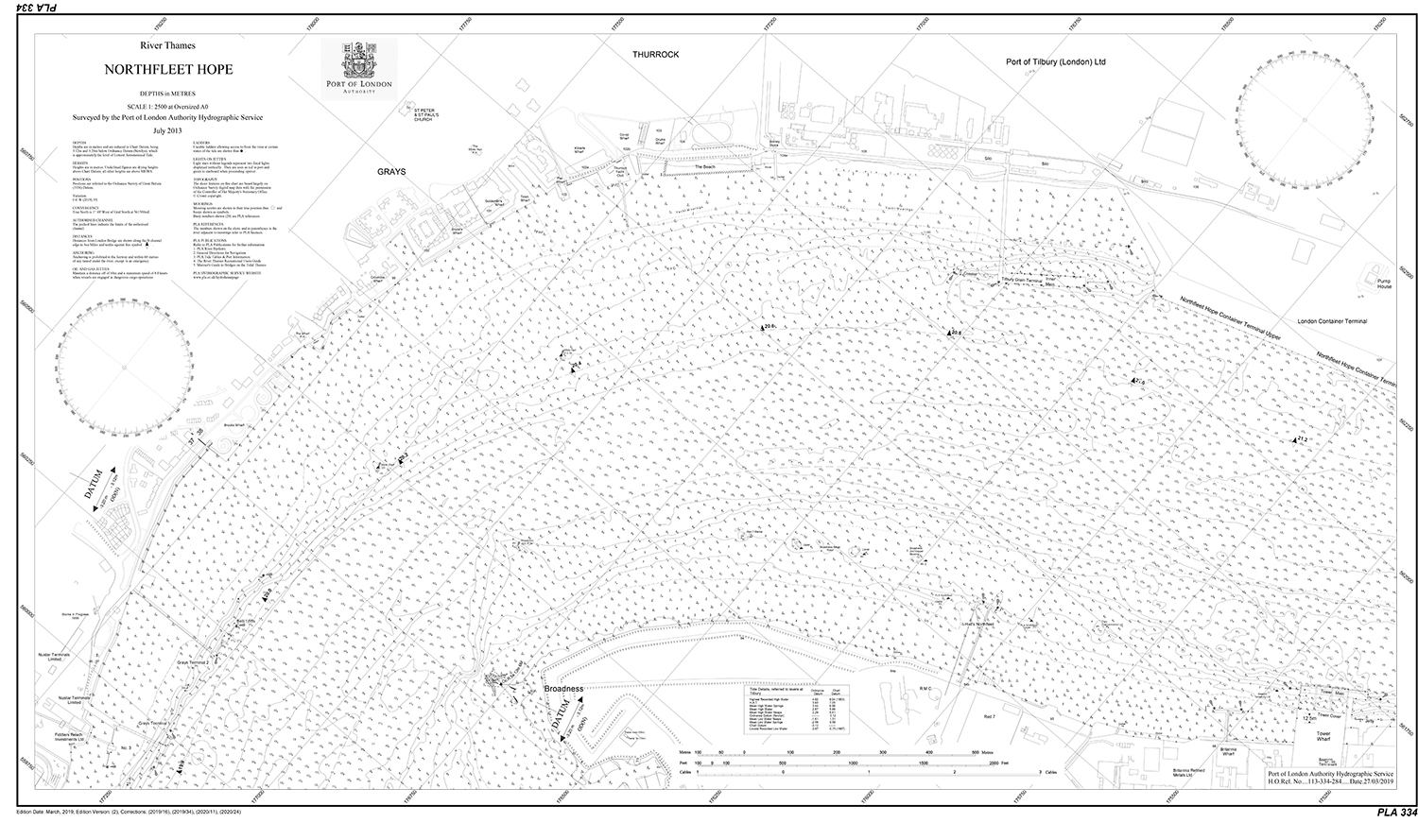
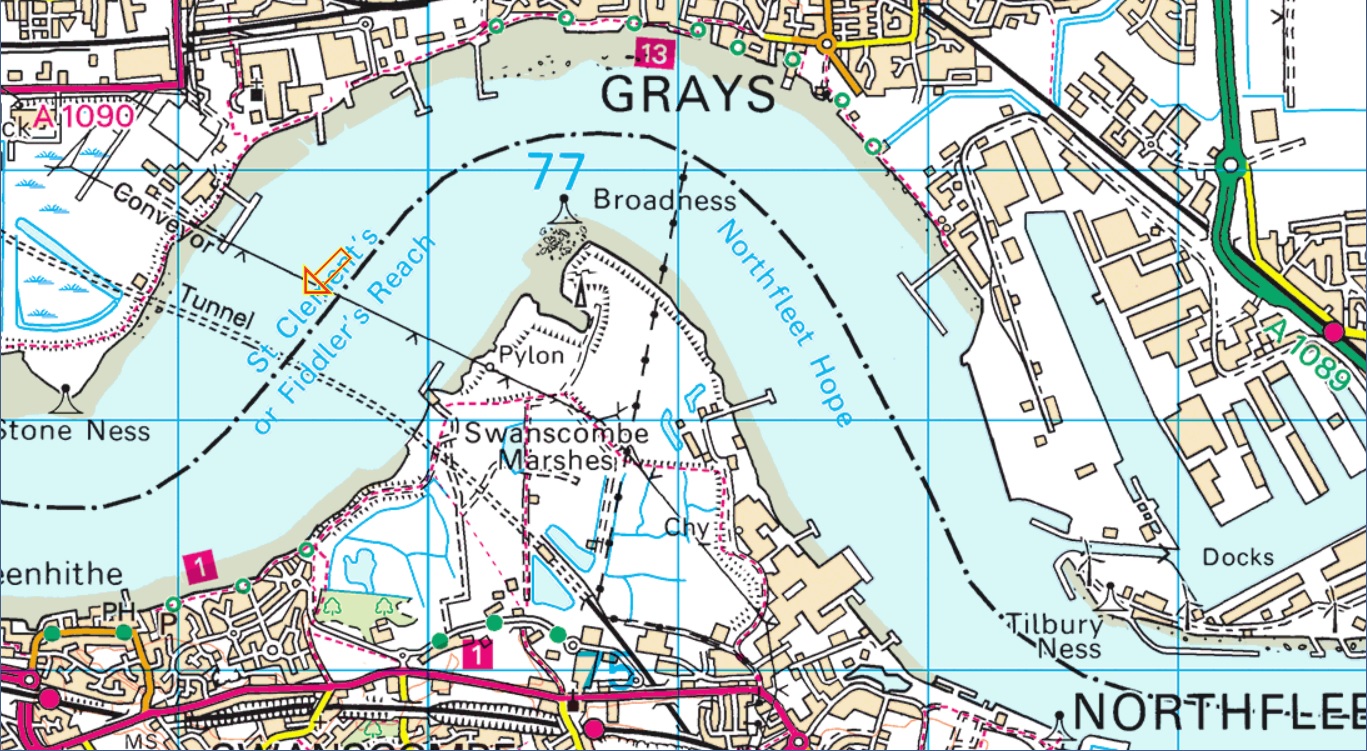
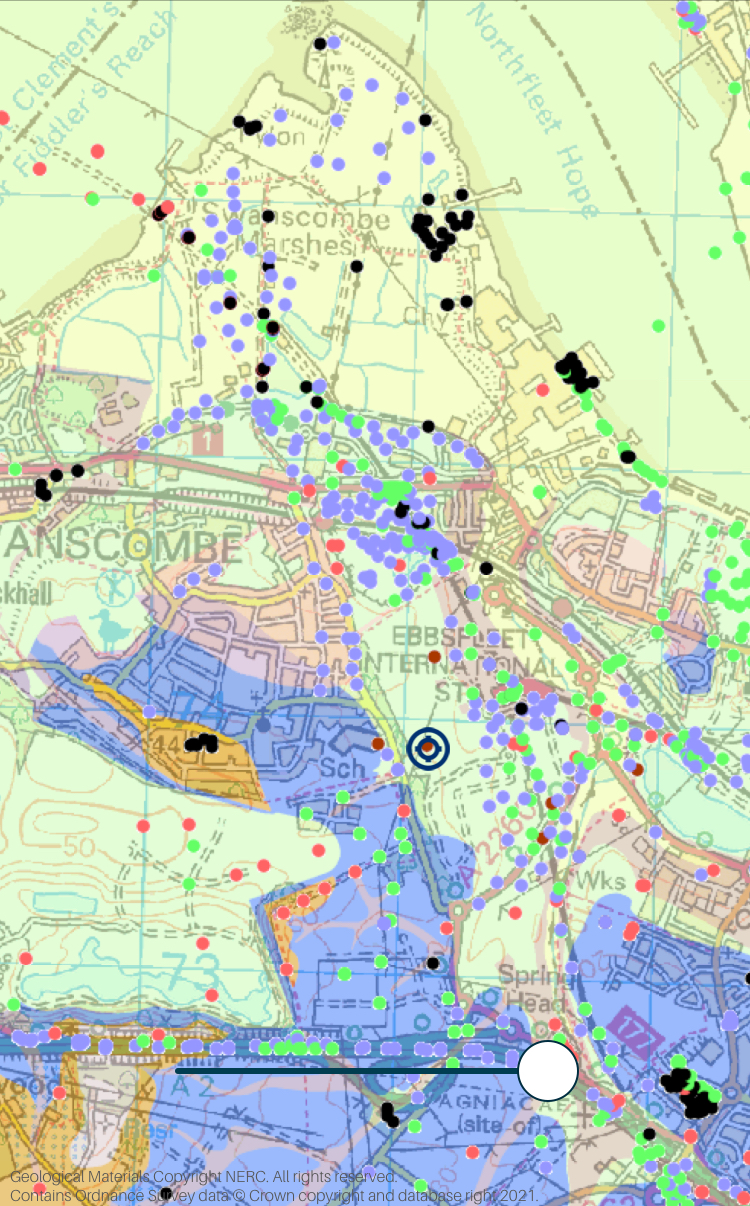
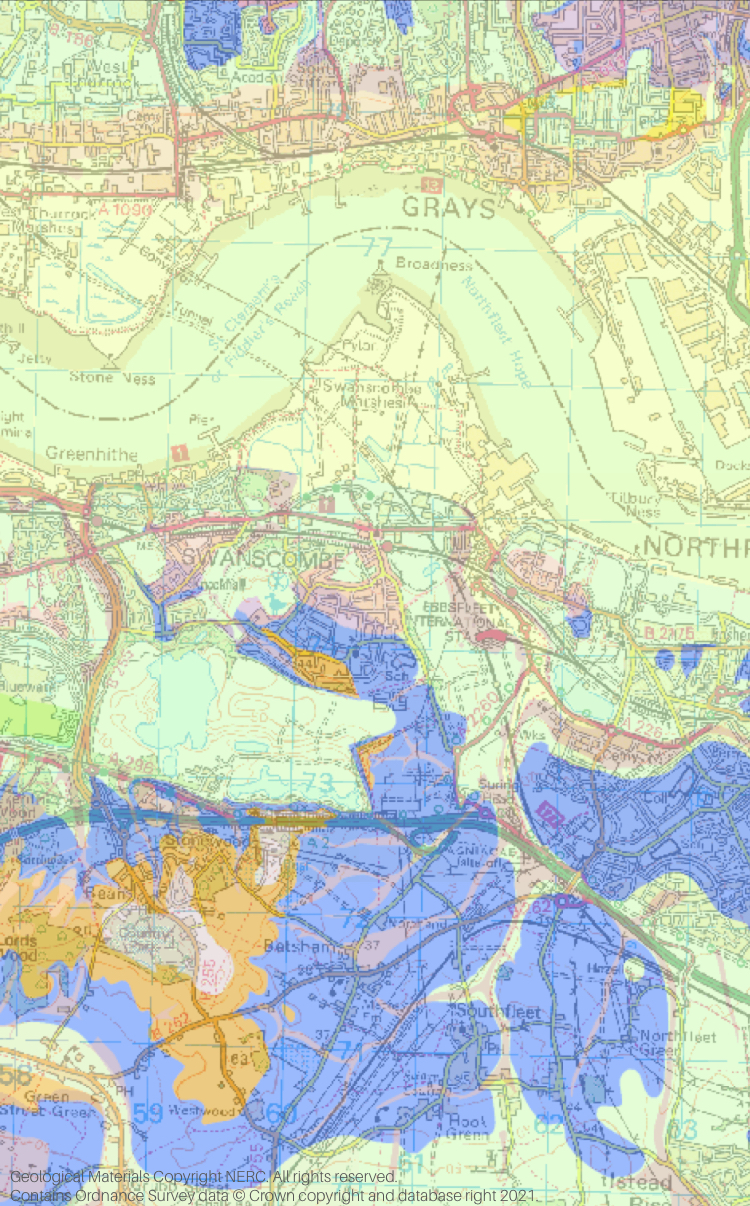
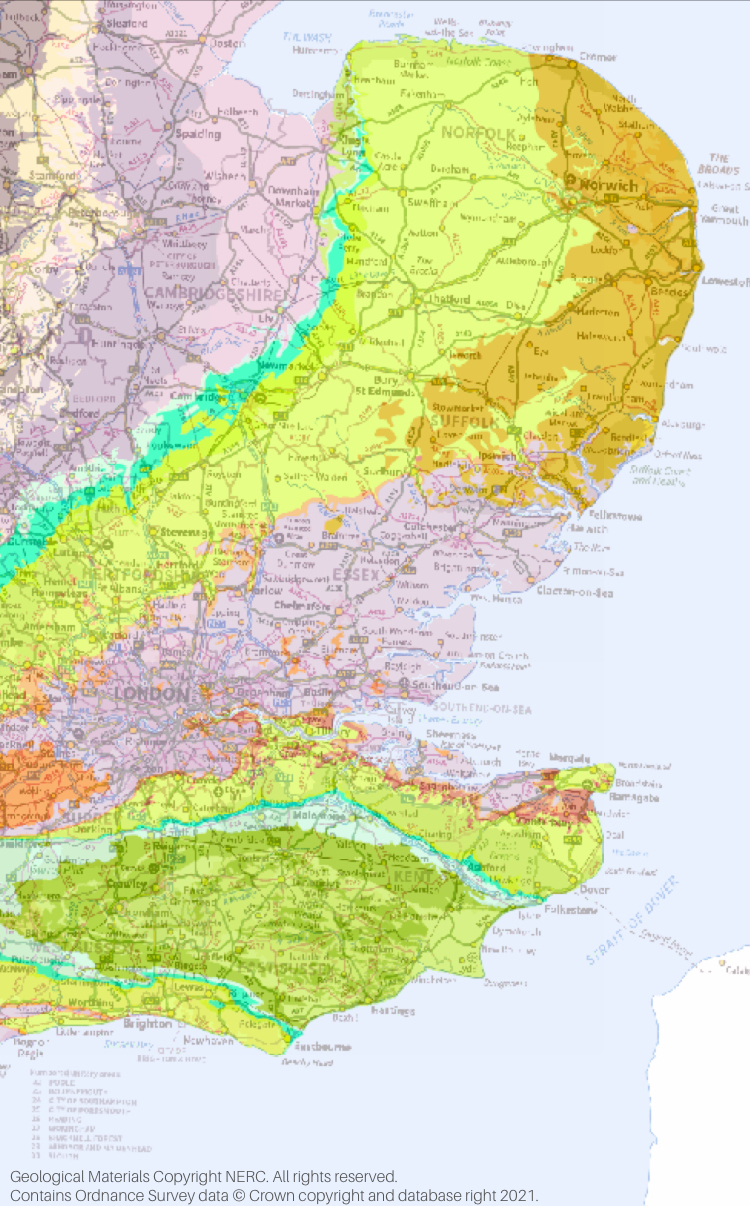
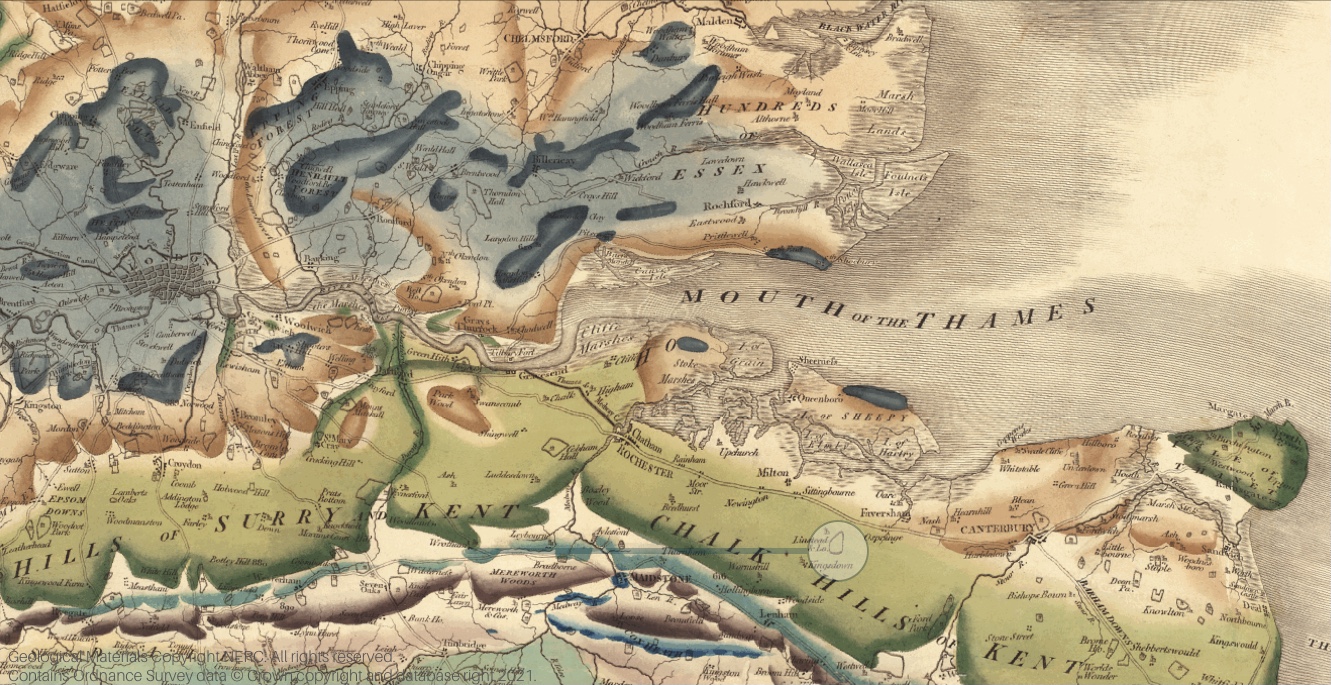
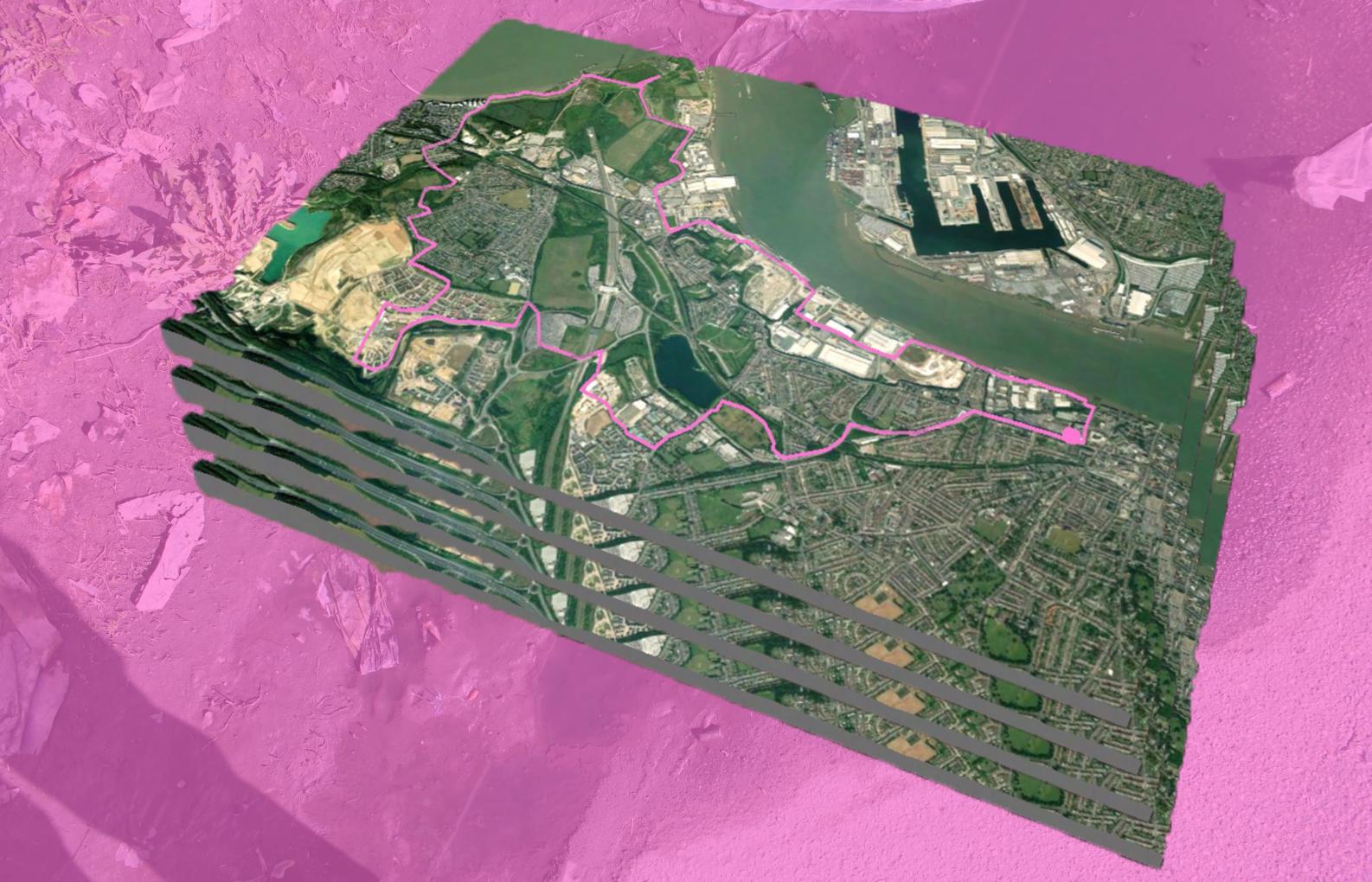
Having been given express permission to indulge my favourite parts of my practice for this commission, I started with Geology, unsurprisingly. I opened a dialogue with Kent Geologists’ Group and began digging into the extensive data collection of the British Geological Survey. I found that every time a borehole is dug (to find out the geological makeup in a specific area for a building project), somebody fills in a data sheet to record the findings, and these are made available in an interactive map on the BGS website. These reports are poems; lists of materials, rich descriptions of colour and texture, a textual illustration of a tubular section of earth – the ground somehow comes alive in my mind when I read them.
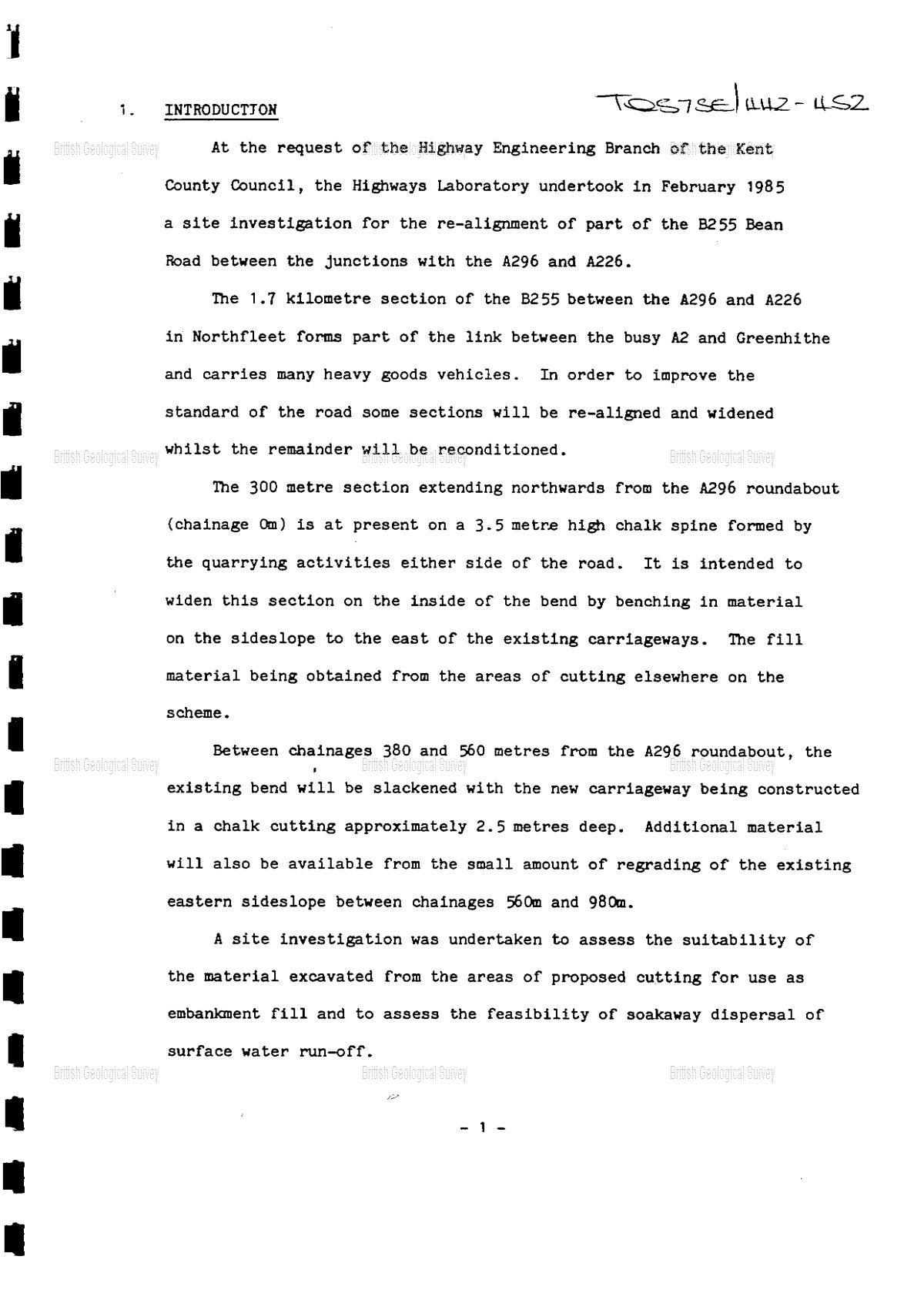
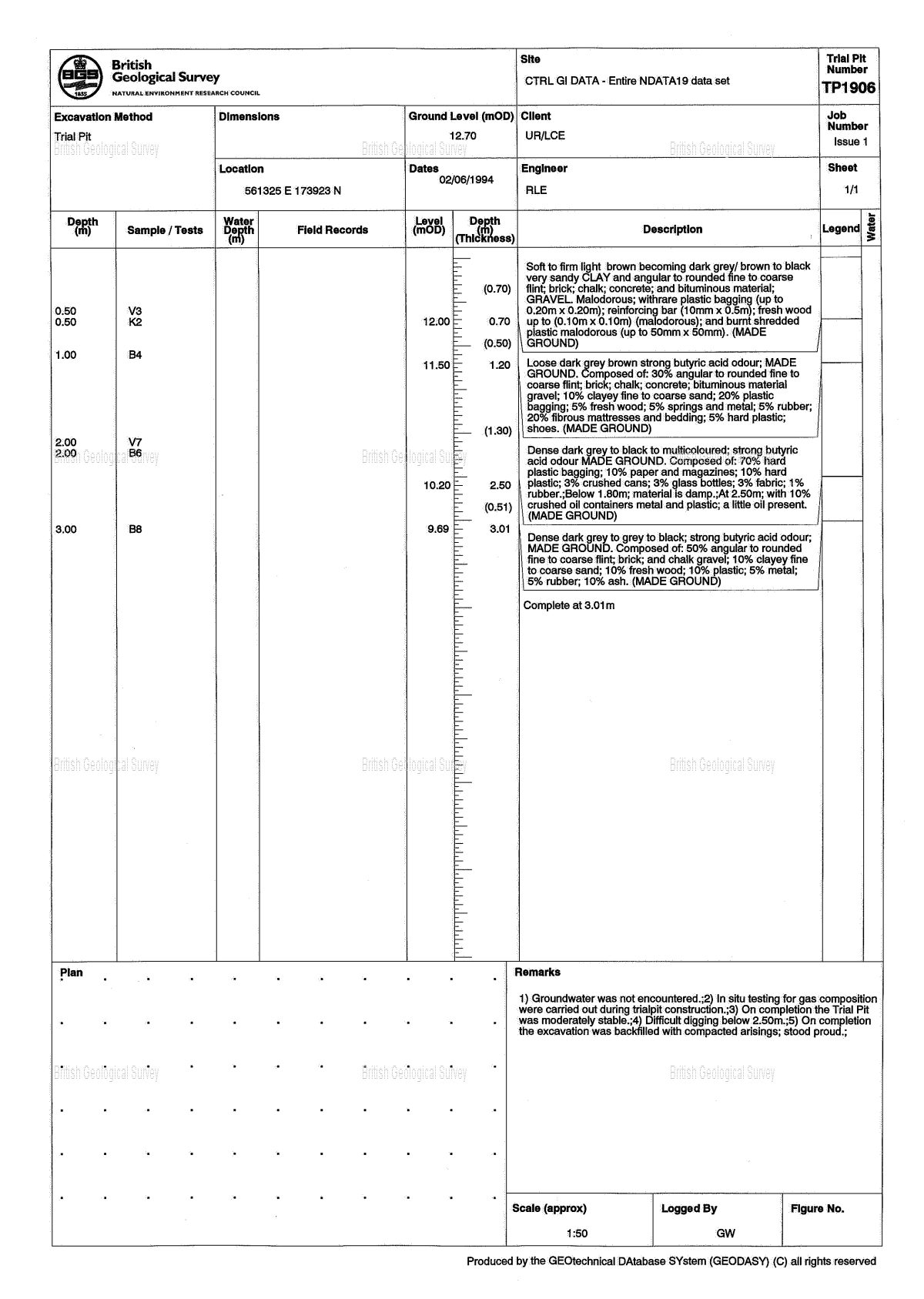
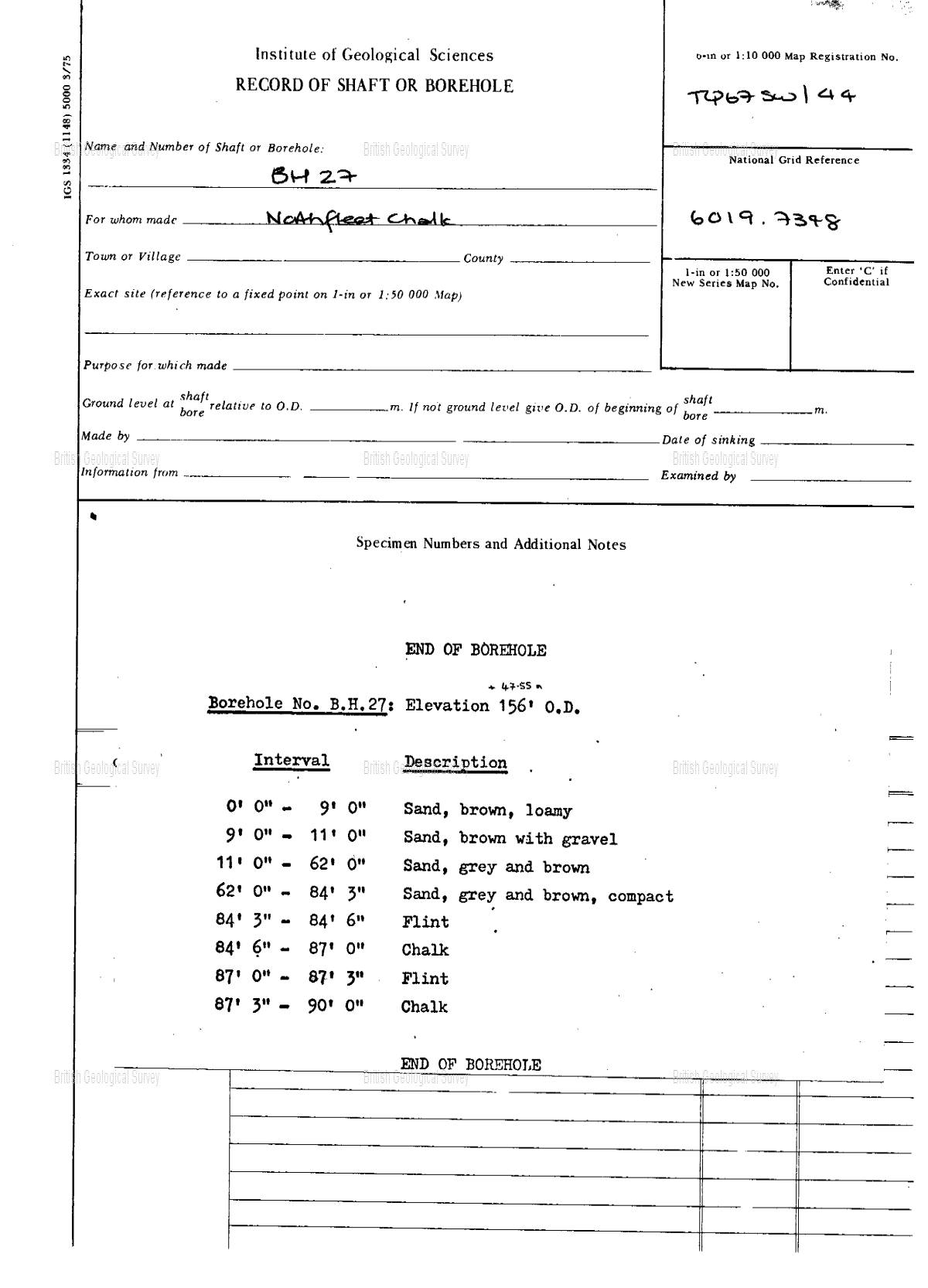
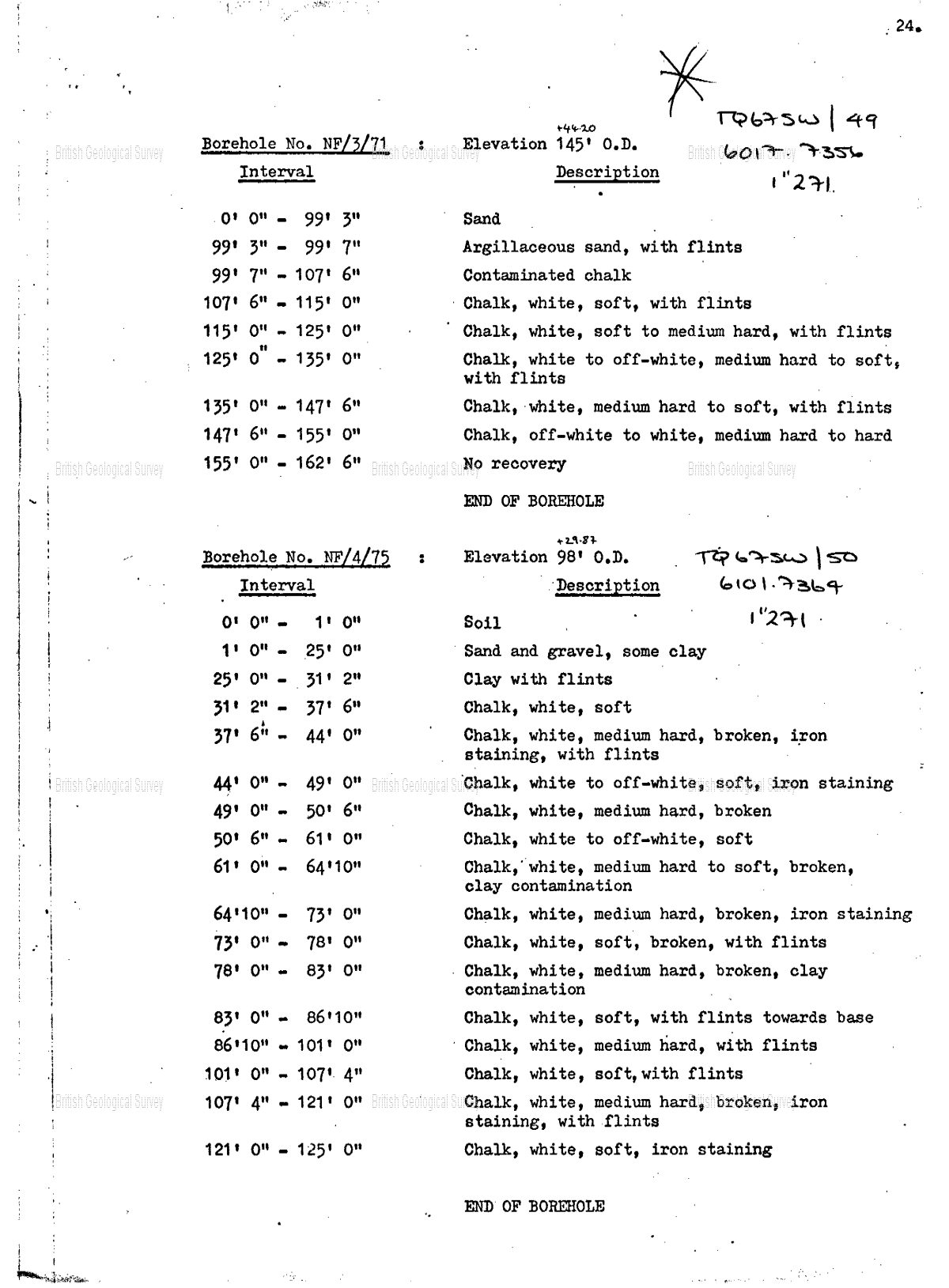
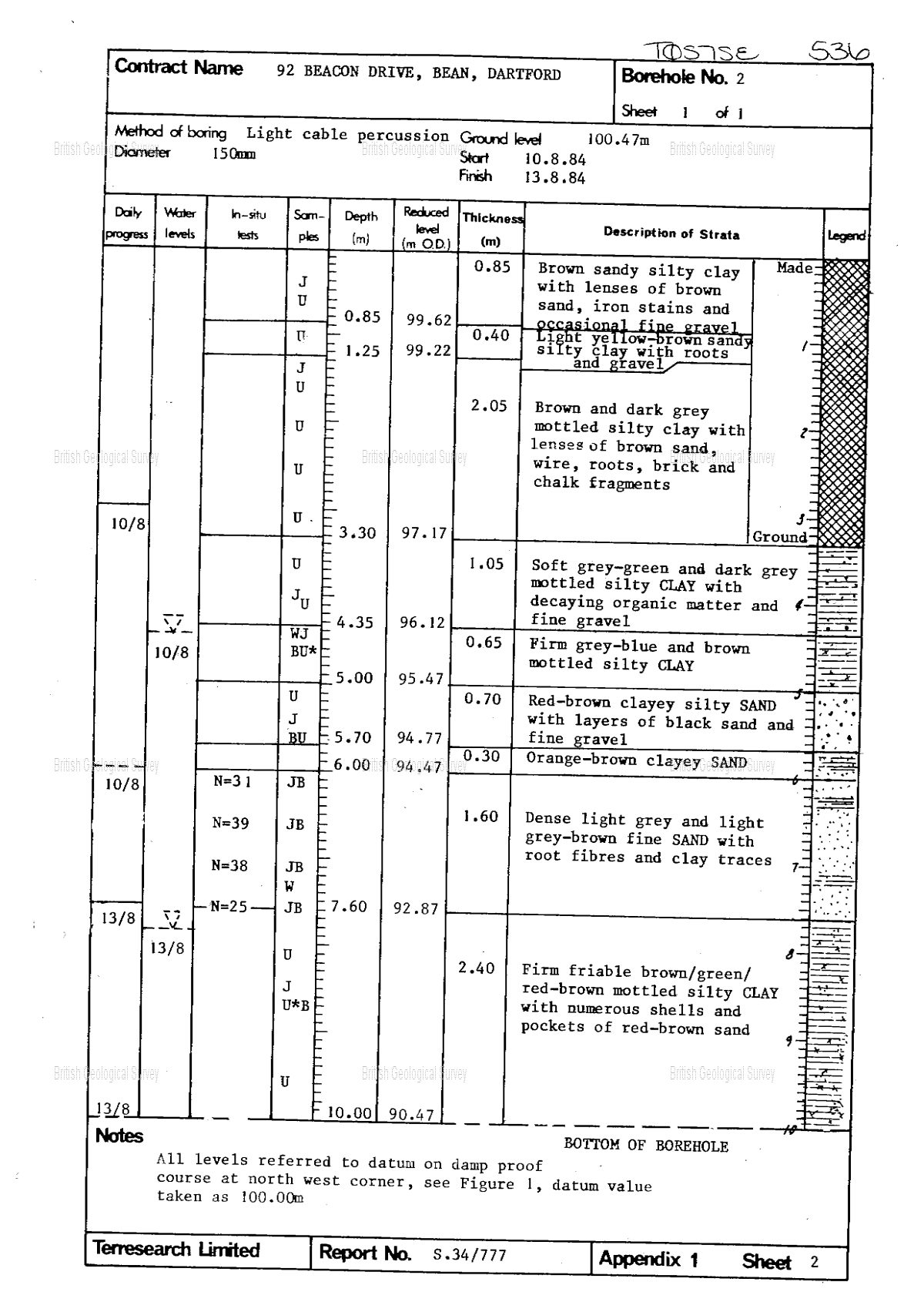
Image source: BGS.ac.uk
Layering of text and image became a methodology for excavating meaning. The language used in the data sheets took on a life of its own in spoken recordings; it was poetic and beautiful but also bleak, mechanical, intimate and urgent all at once. The language of geology speaks to so much more than just the physical layering of materials – it signposts both the past and potential futures; the raw materials of clay and chalk specifically, as the main constituents of cement, are key players in the industrial legacy and developing future of this area.
There are so many sites of interest in this area – after spending hours online reading historical records, facebook groups, articles and books, I plotted a walking route which would take me to see some of these sites: from my home, down towards the River, through the Northfleet Industrial Area, across the Swanscombe Peninsula, through Greenhithe, down through the Ebbsfleet Valley and back home through Northfleet to Gravesend. This walk would take me an entire day, on the hottest day of the year so far in 2021; approximately 23km, alone. I documented the walk through instagram stories: these are available to view in my instagram highlights (‘TMBTP🥾’ or follow this link) – it takes around 20 minutes to view the whole thing.

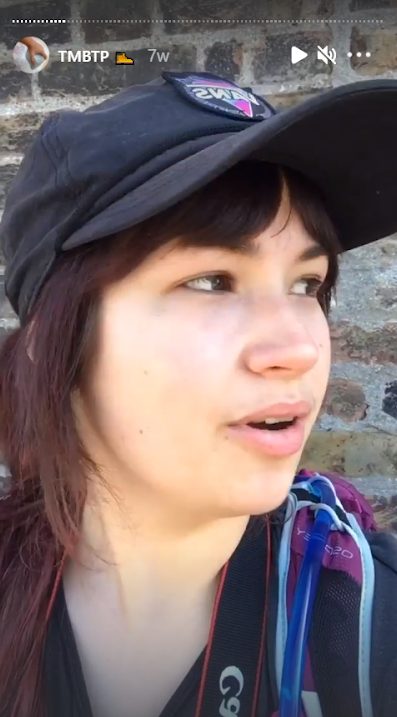
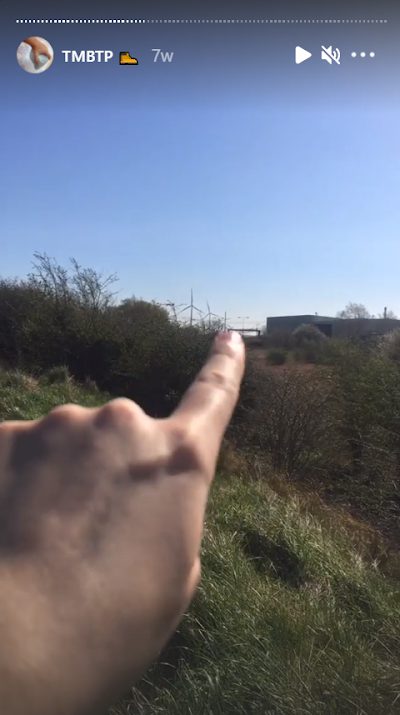
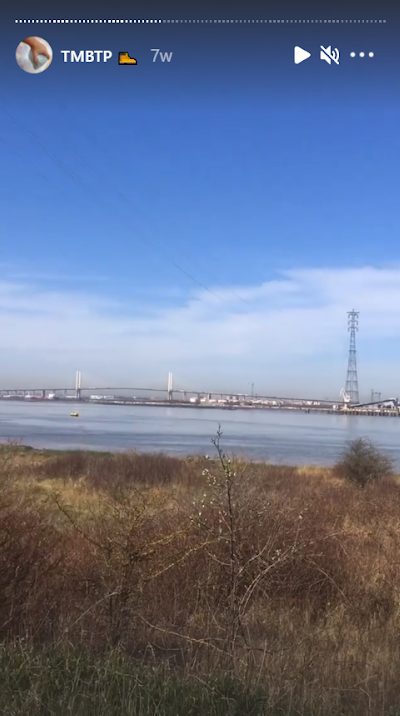
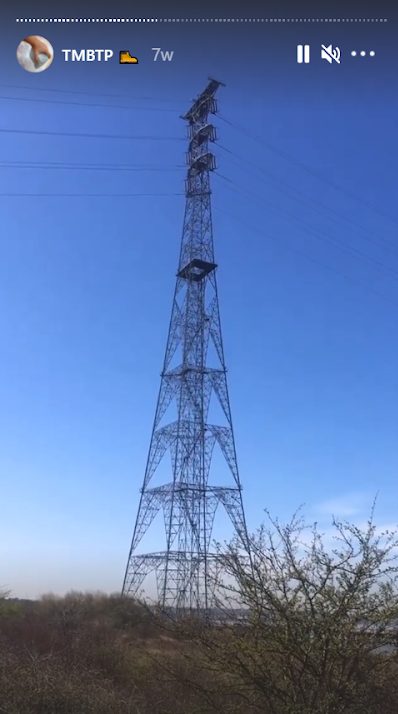
Places I visited or passed include: Cable Wharf, Northfleet Harbour/Ancient Ebbsfleet River, Aspdin’s Kiln, Ebbsfleet United Football Stadium, Botany Marshes/Broadness Salt Marsh, Swanscombe Pylon, QEII Bridge (Dartford Crossing), Ingress Park/Ingress Abbey, Swanscombe Skull Heritage Park, Ebbsfleet Garden City: Castle Hill Community Centre/Whitecliffe Lakes/Ebbsfleet International Station, Northfleet Urban Country Park.
The response to this pseudo-walking tour via instagram stories began a line of thought about screens as portals to other locations; an experience of place through a phone or laptop. This was what ultimately led to the decision to present the final outcome of the project as a film – a slice of a place delivered as a package through the internet, accessible anywhere with an internet connection. It made sense to me that I should reflect the conditions of the art experience of the past year, in line with Estuary’s hybrid modes of online and offline presentation.
At this time I was also thinking about the ‘Geology of an Image’, and the ‘Sedimentary Writing’ – a way of thinking about the contents of images and text, the layers and compressions which shape them and their relationships to each other.
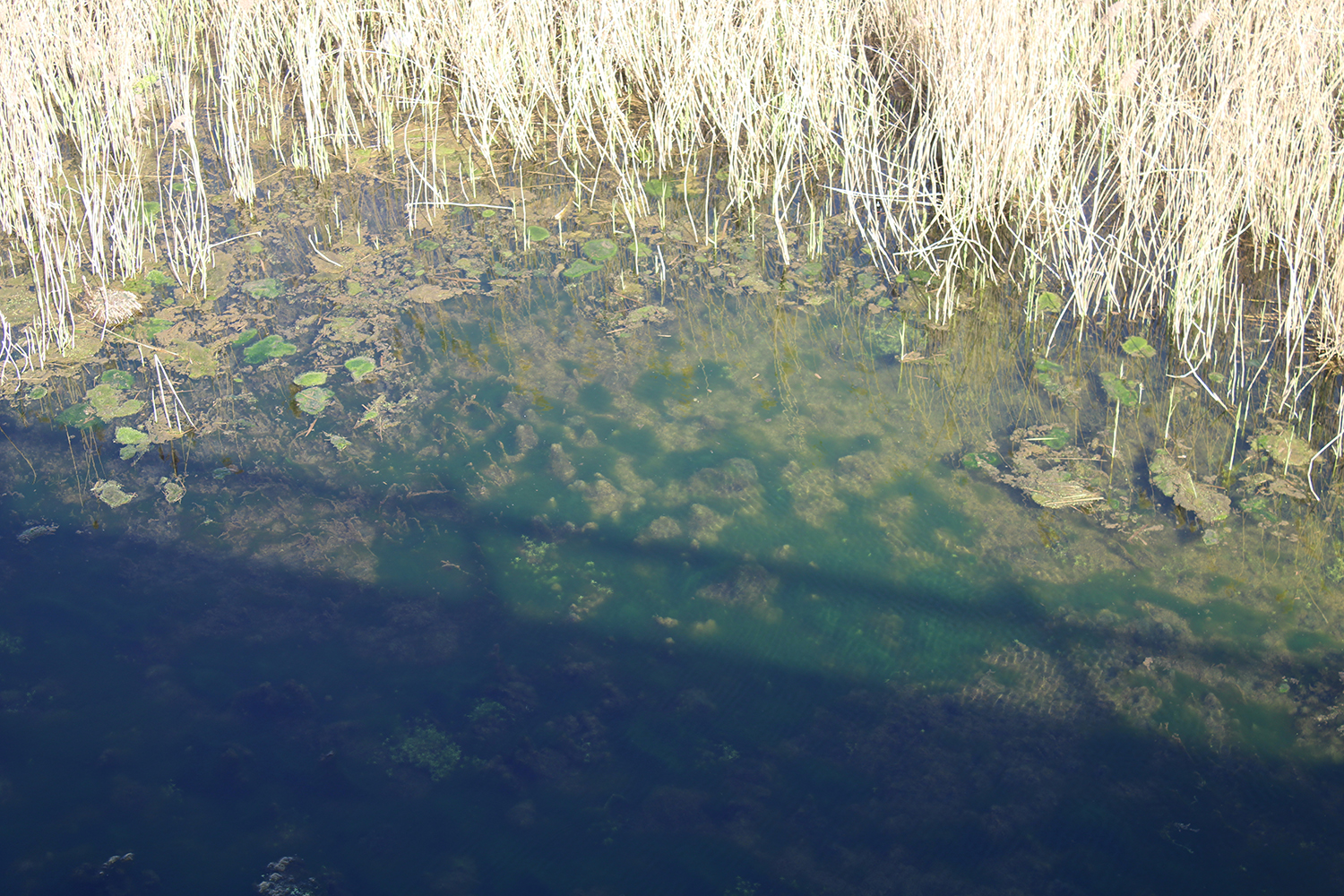
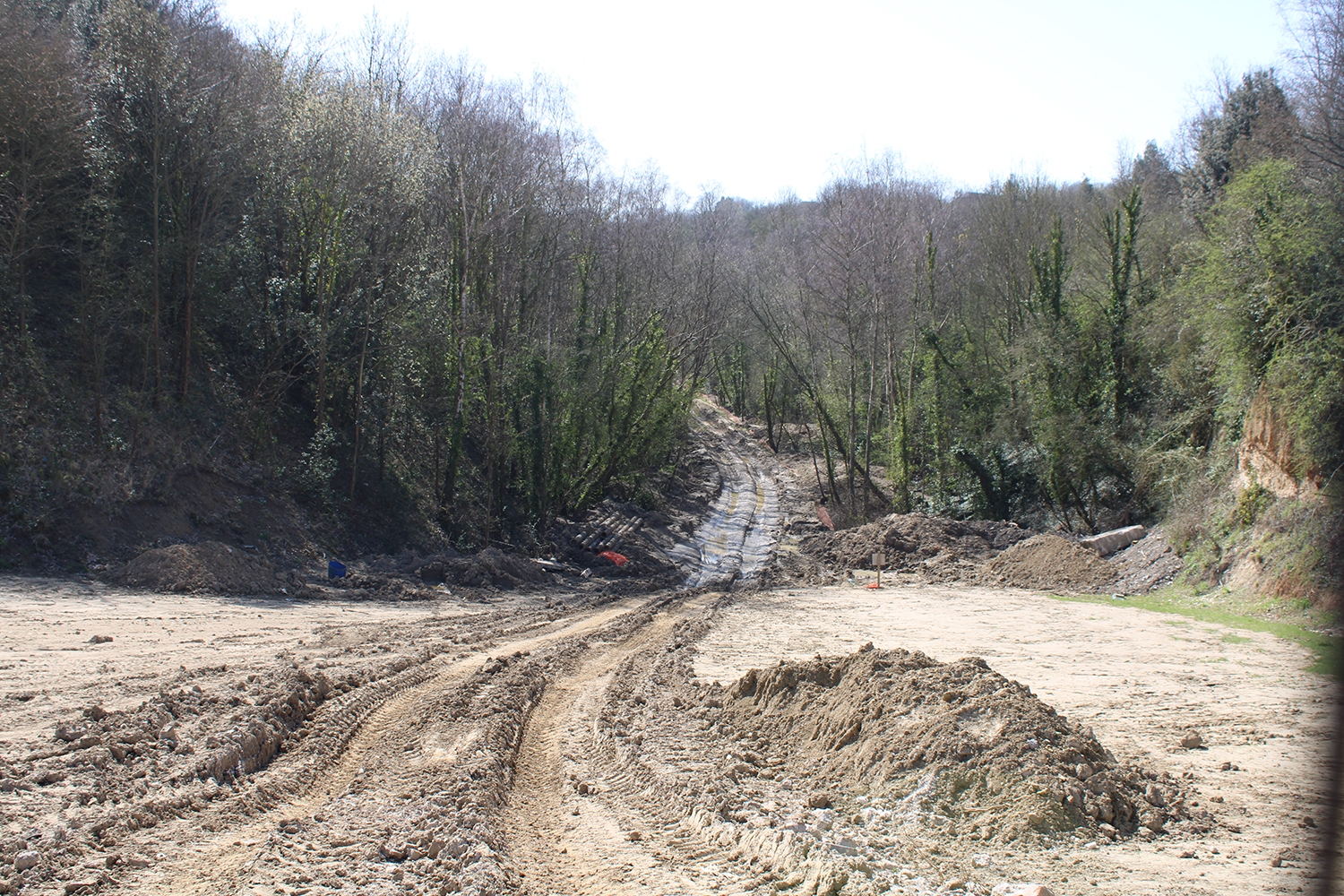
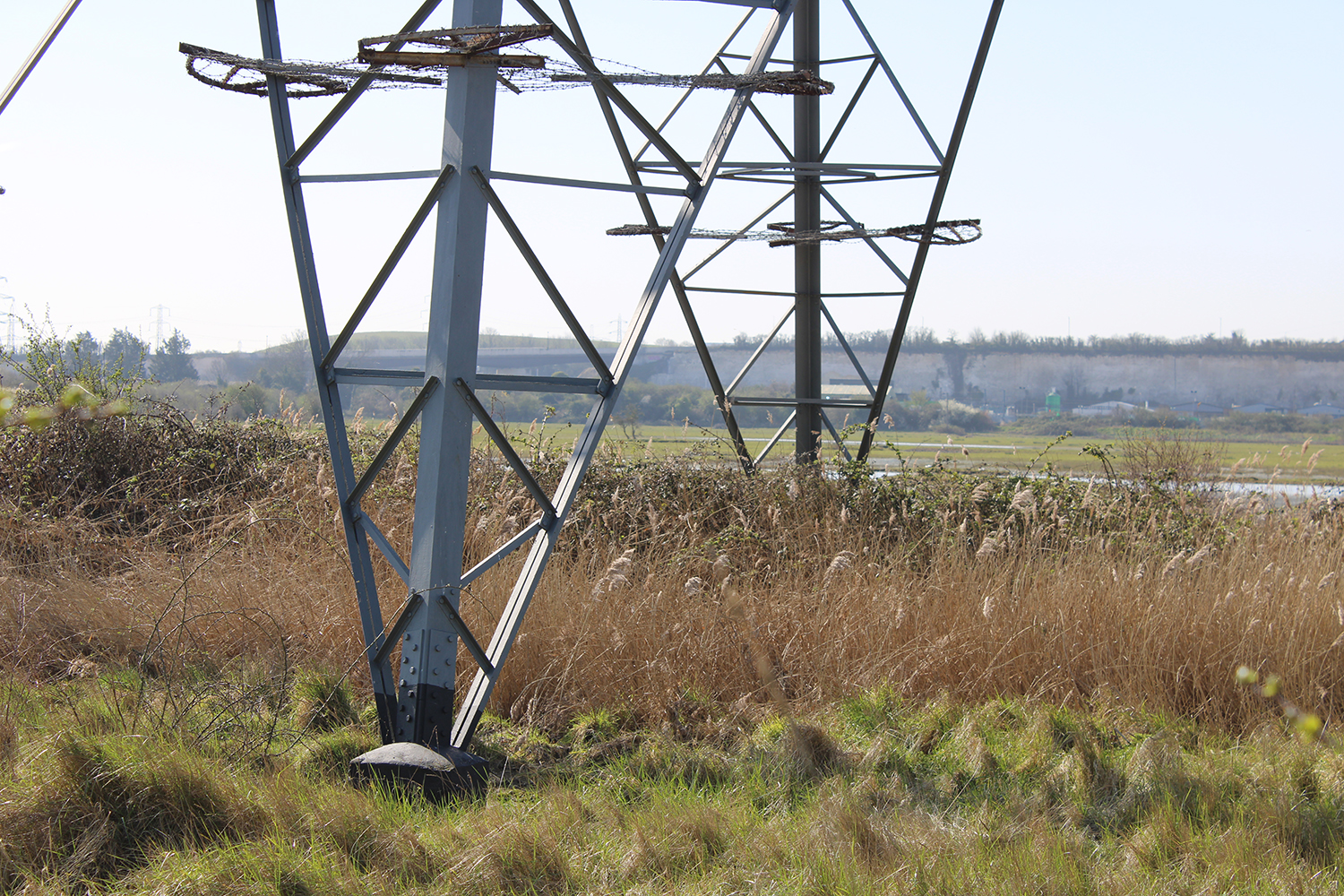
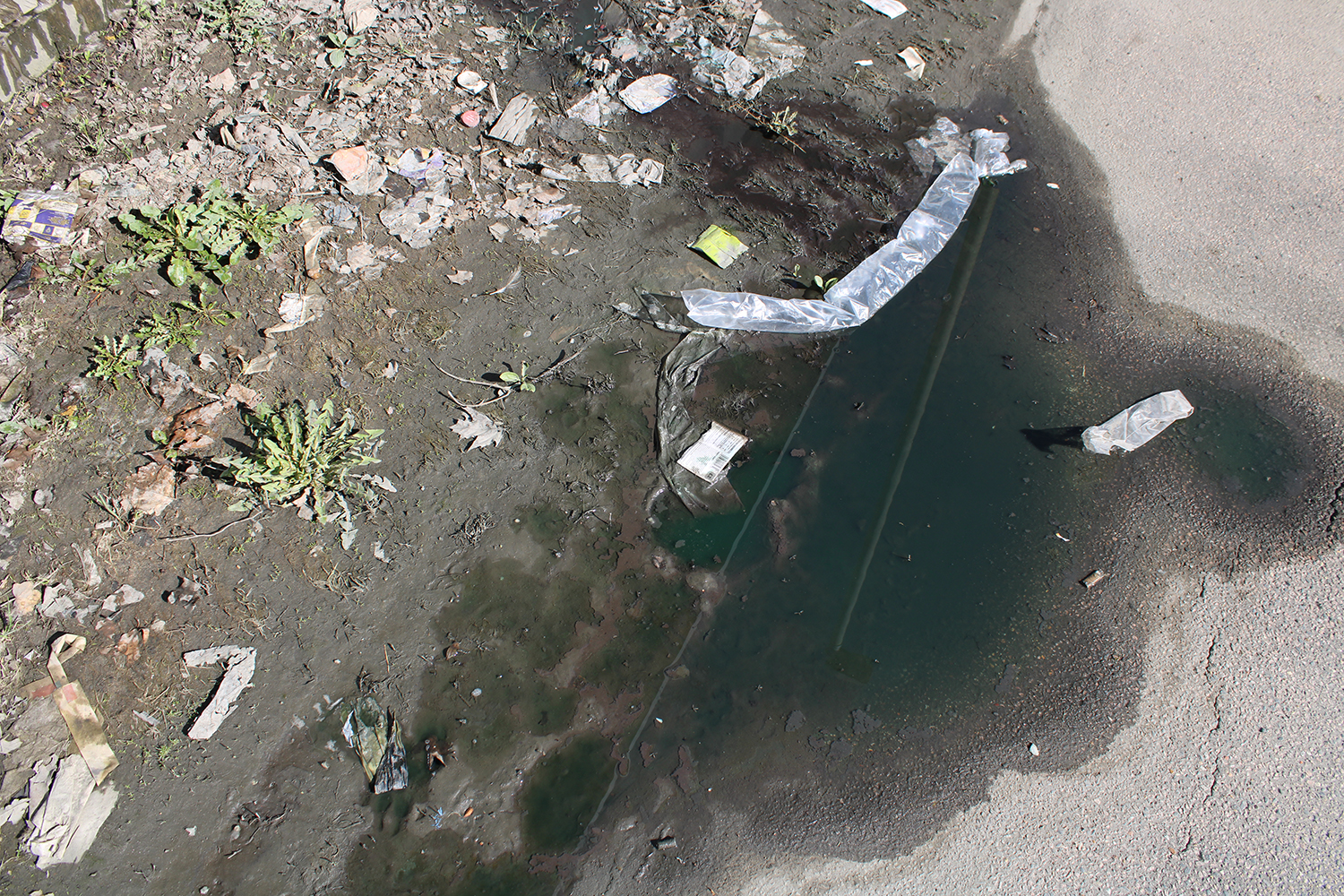
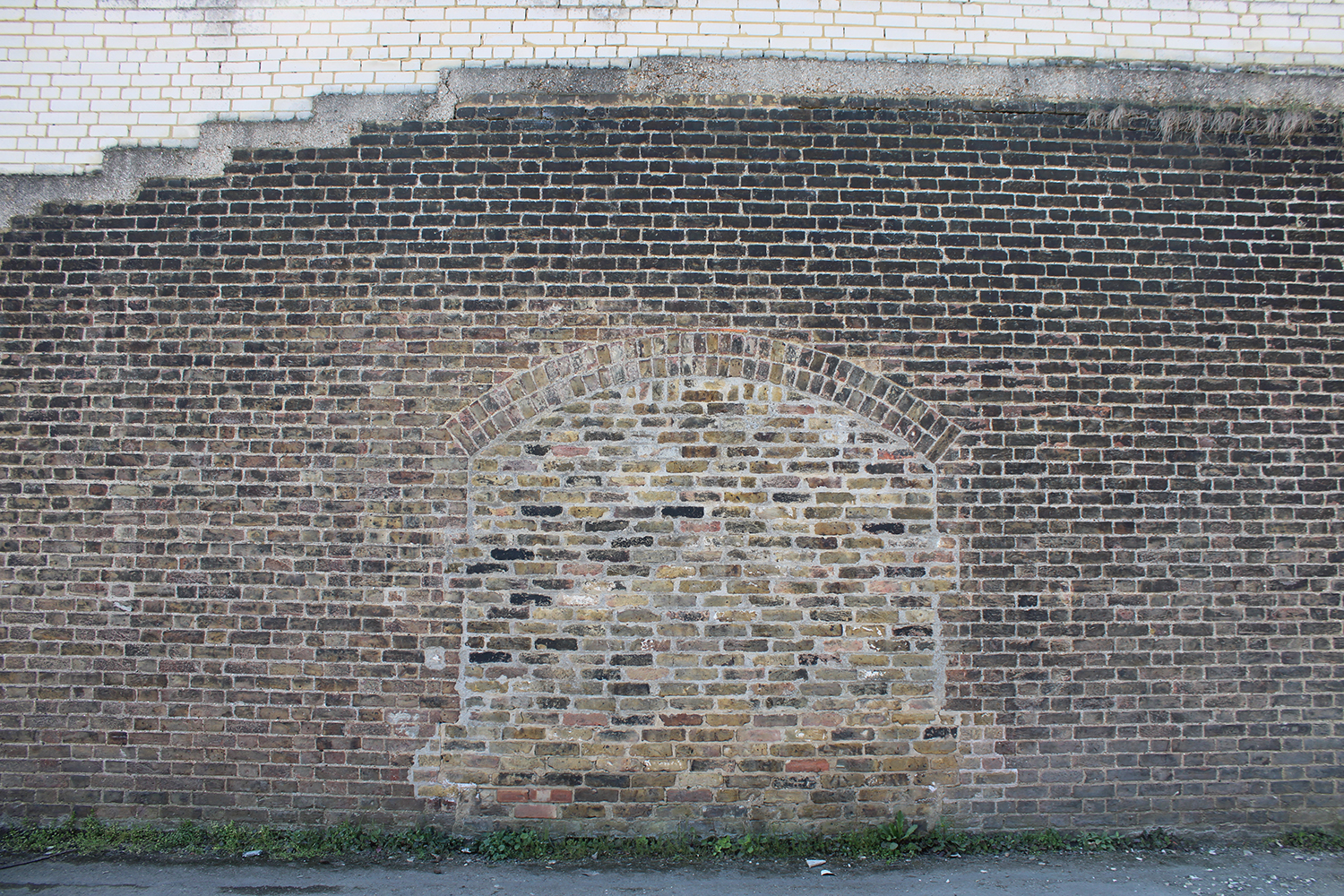

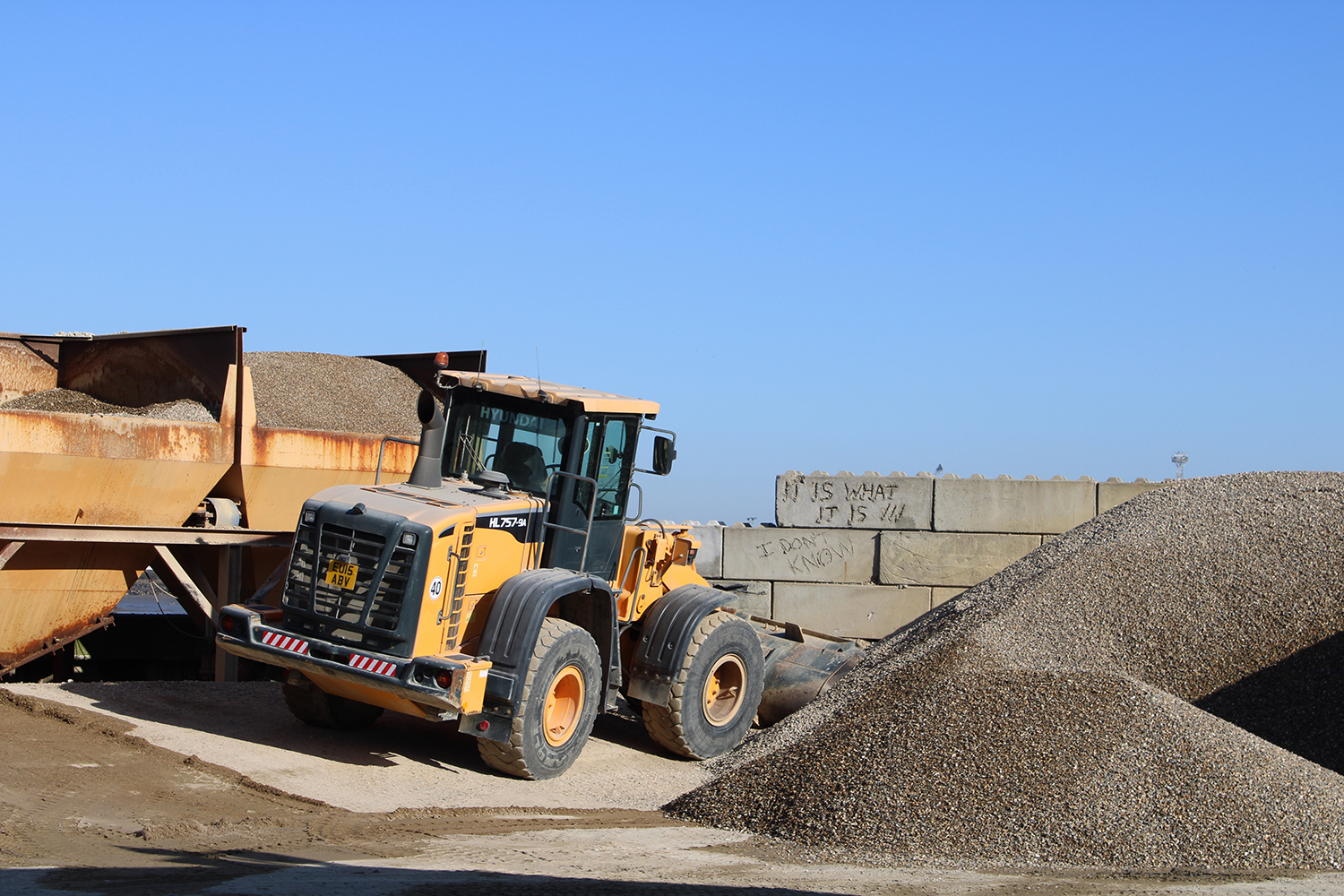
Notes and lists are the favoured writing styles of the attention-poor. I have known for a long time that a dramatically-reduced attention span is a direct symptom of trauma – it happened to me before, and it was happening to me now, along with the vast majority of others. It was important to just go with it. I started to think about the wider sphere of fragmentary writing; the boreholes provided rhythm and richness in small packages, but what could other formats give me? As I began to wonder about how I could further give life to the materials of the subterranean landscape, and when I discovered that there are at least 50 different types of chalk in England alone, I drew out a family tree, twisting a grid-system of groups and subdivisions into an organic web of imaginary relationships.
That didn’t go anywhere, but I then started writing dialogues between materials; exchanges of thought and sentiment passed between clay and sediment. Then I wrote them out as if they were characters appearing in a list in the first pages of a stage-play.

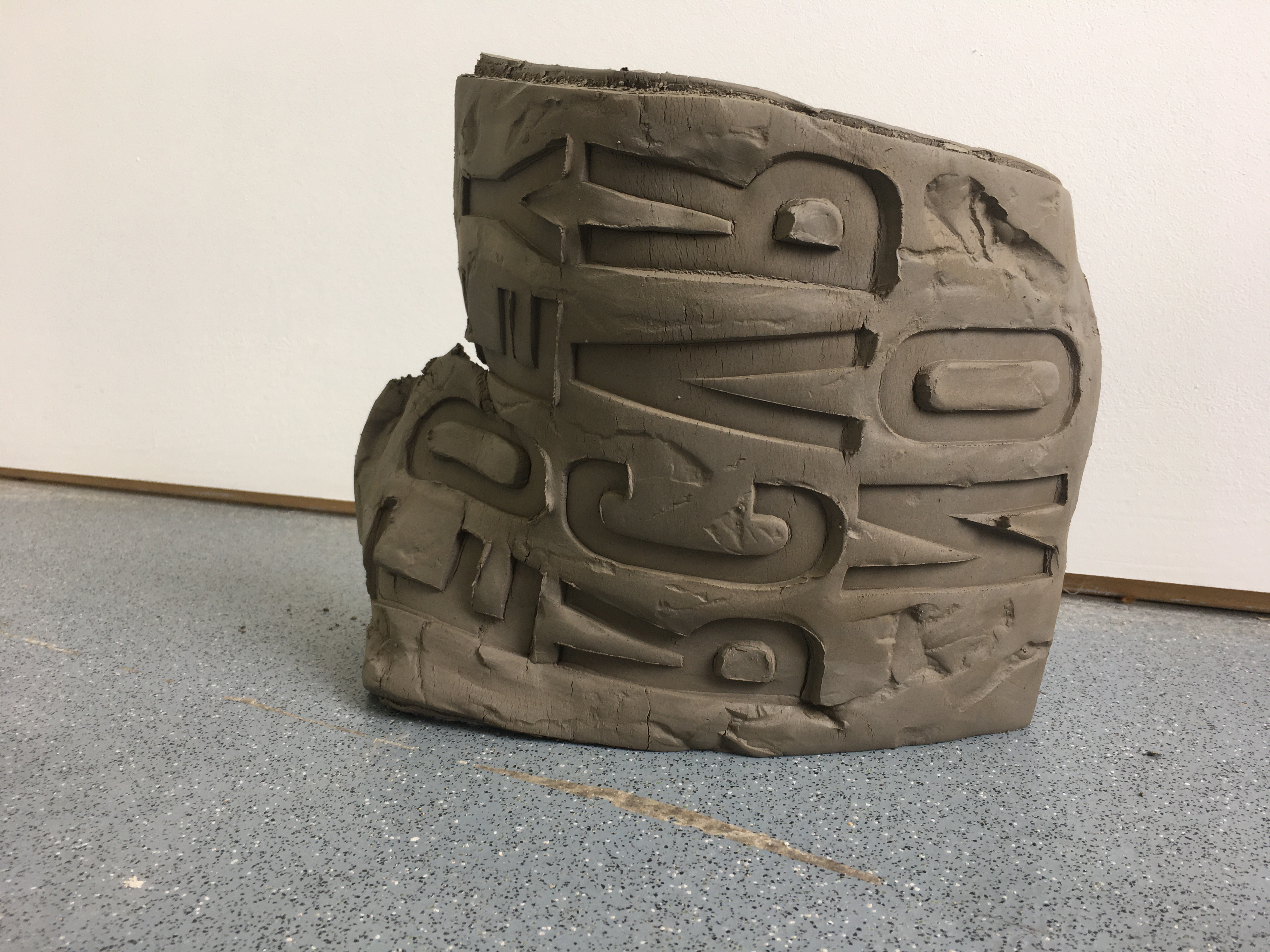
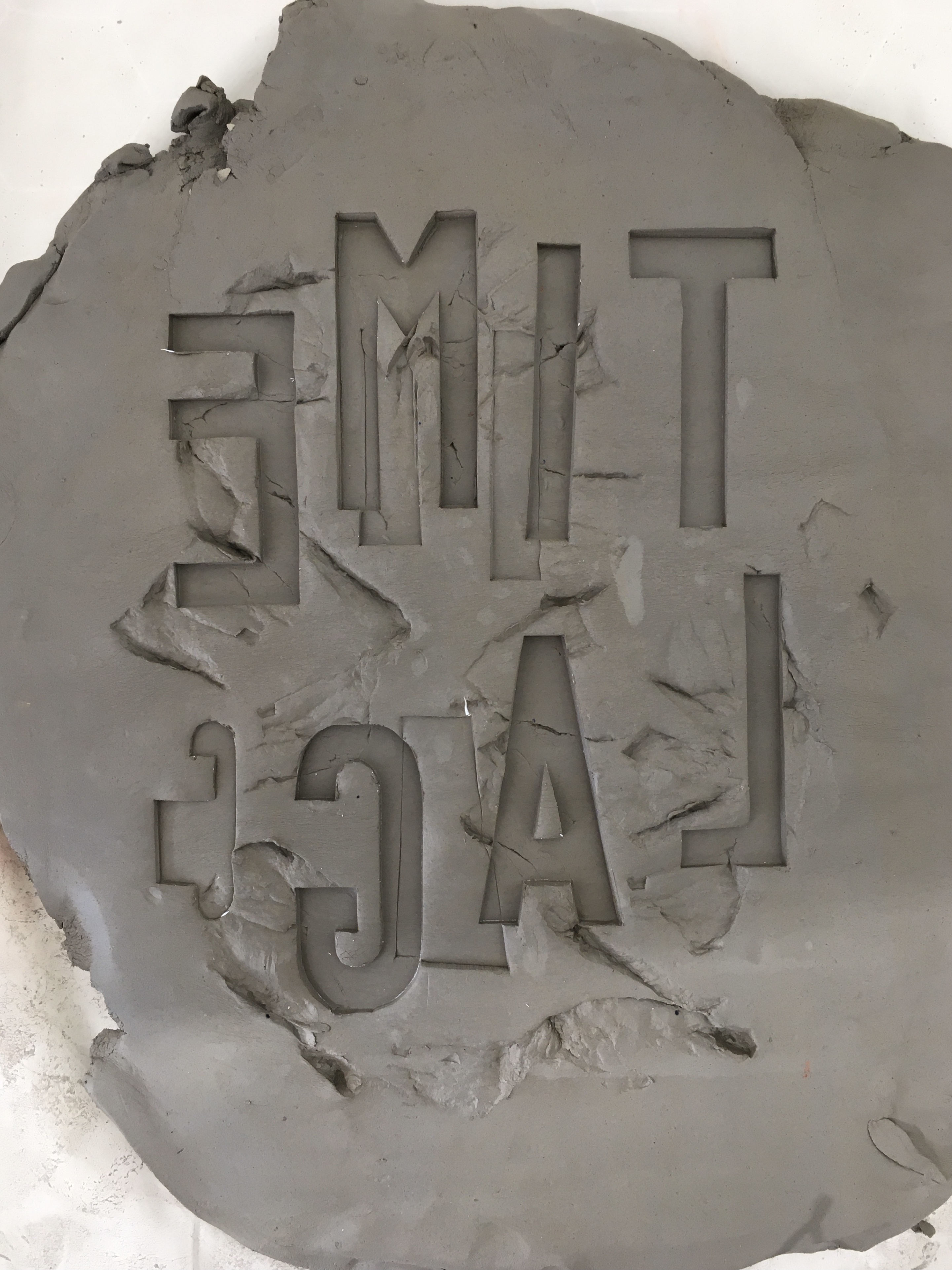
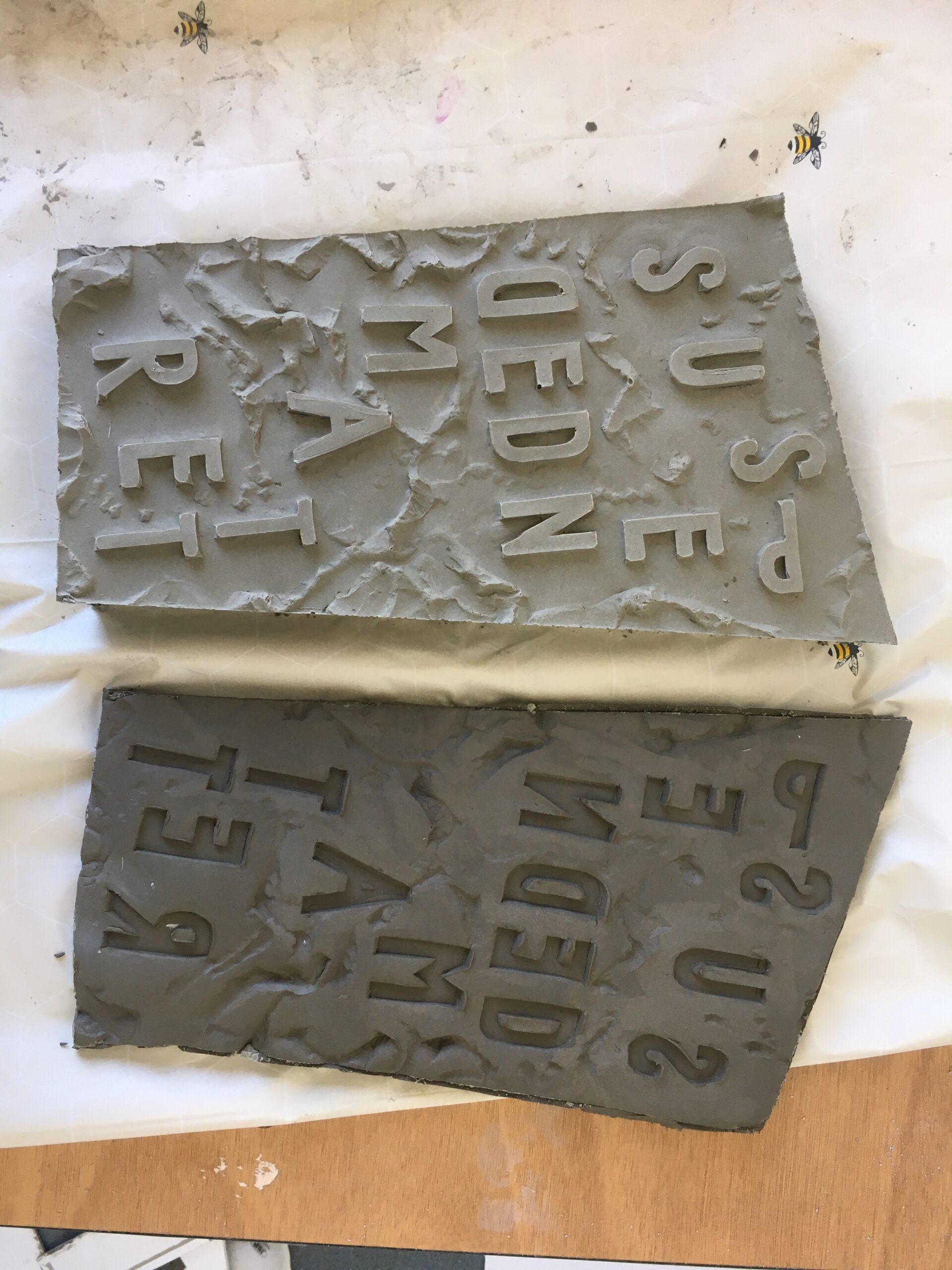
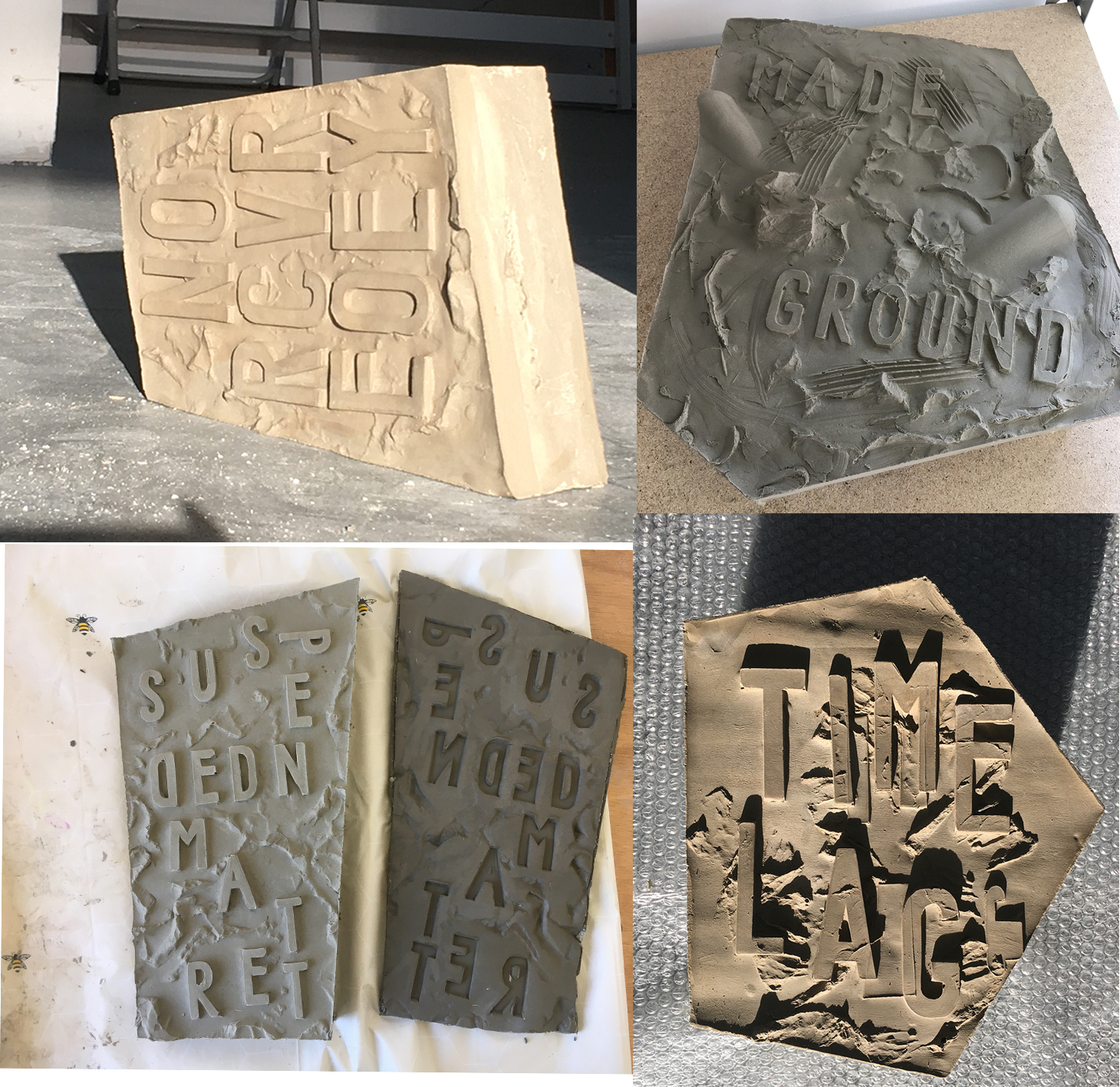

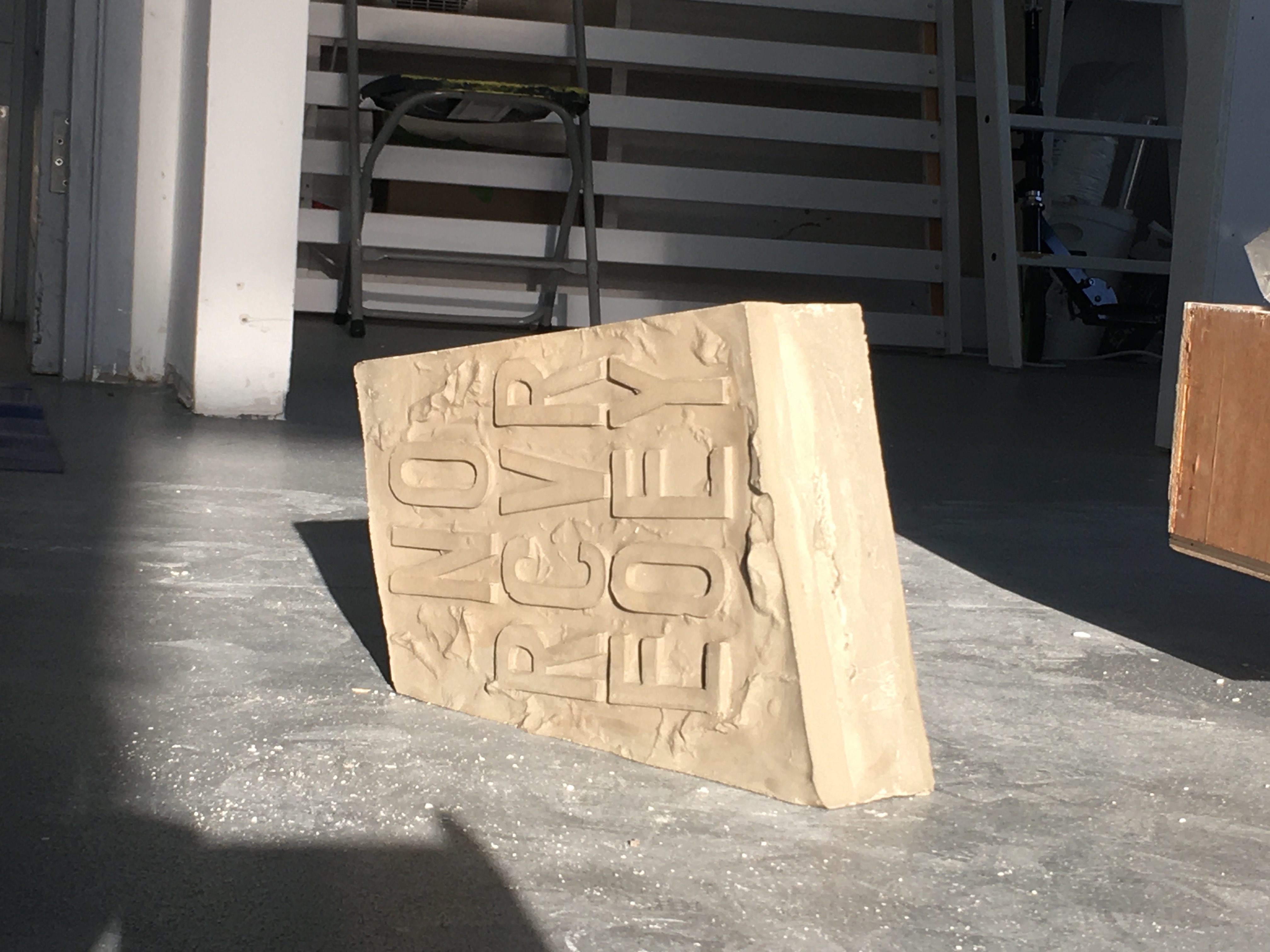
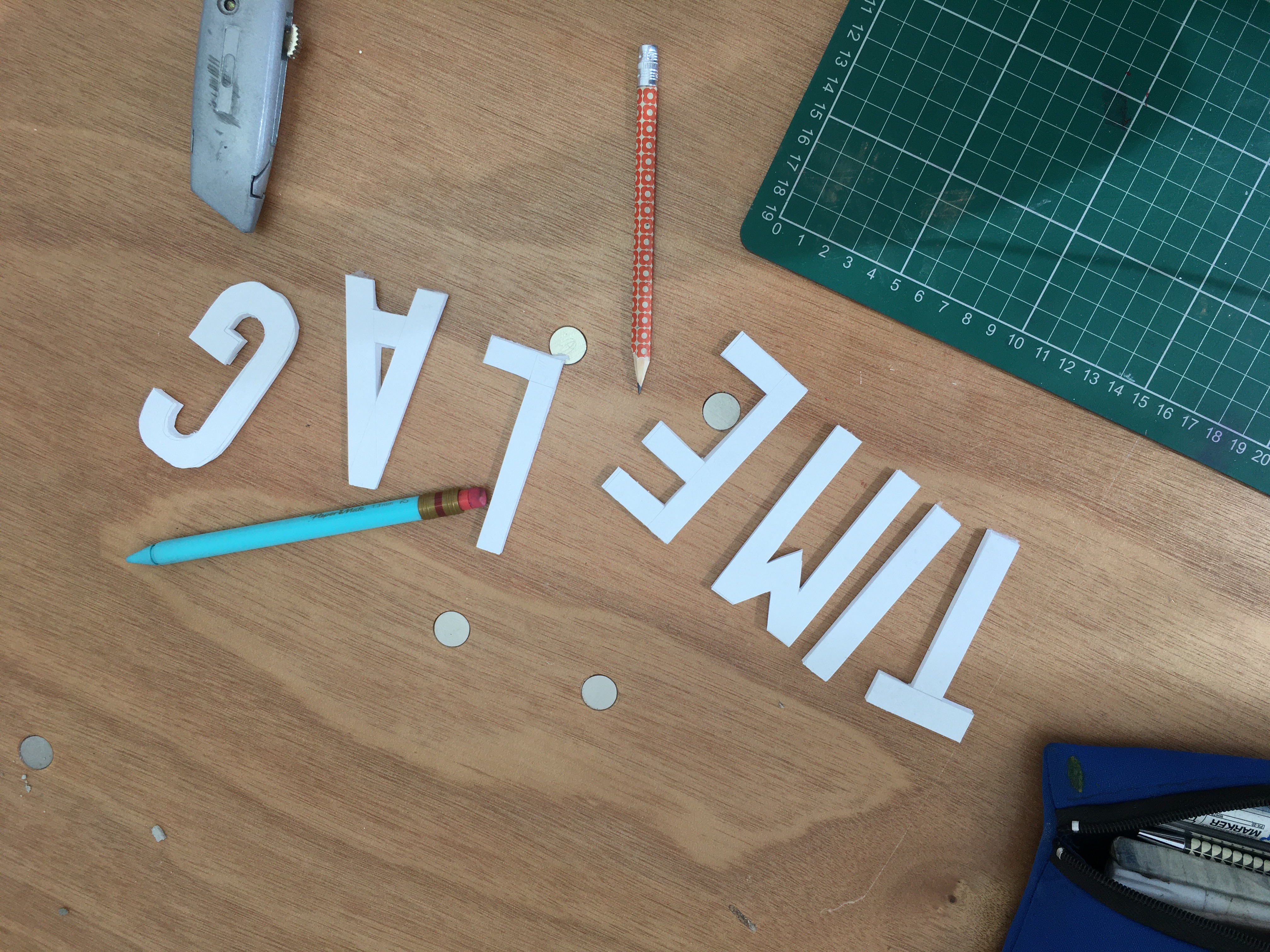
I knew I wanted to incorporate text into sculptural works within this. I made five concrete blocks with embossed lettering, using a primitive but satisfying mould-making technique – cutting letterforms from foam board, pressing them into a slab of clay, then building a box around the design and pouring concrete into it to take a cast. These bear technical terms from geological journals which have an immediate poetry to them.
I also realised a dream to create large-scale fabric prints with slogans referencing geological time and processes. I used imagery from the research walk to layer textures and landmarks, focusing one on wet, low-down spaces, and the other on high, airy spaces. I had them printed on water-resistant fabric, 1.5x1m in size.
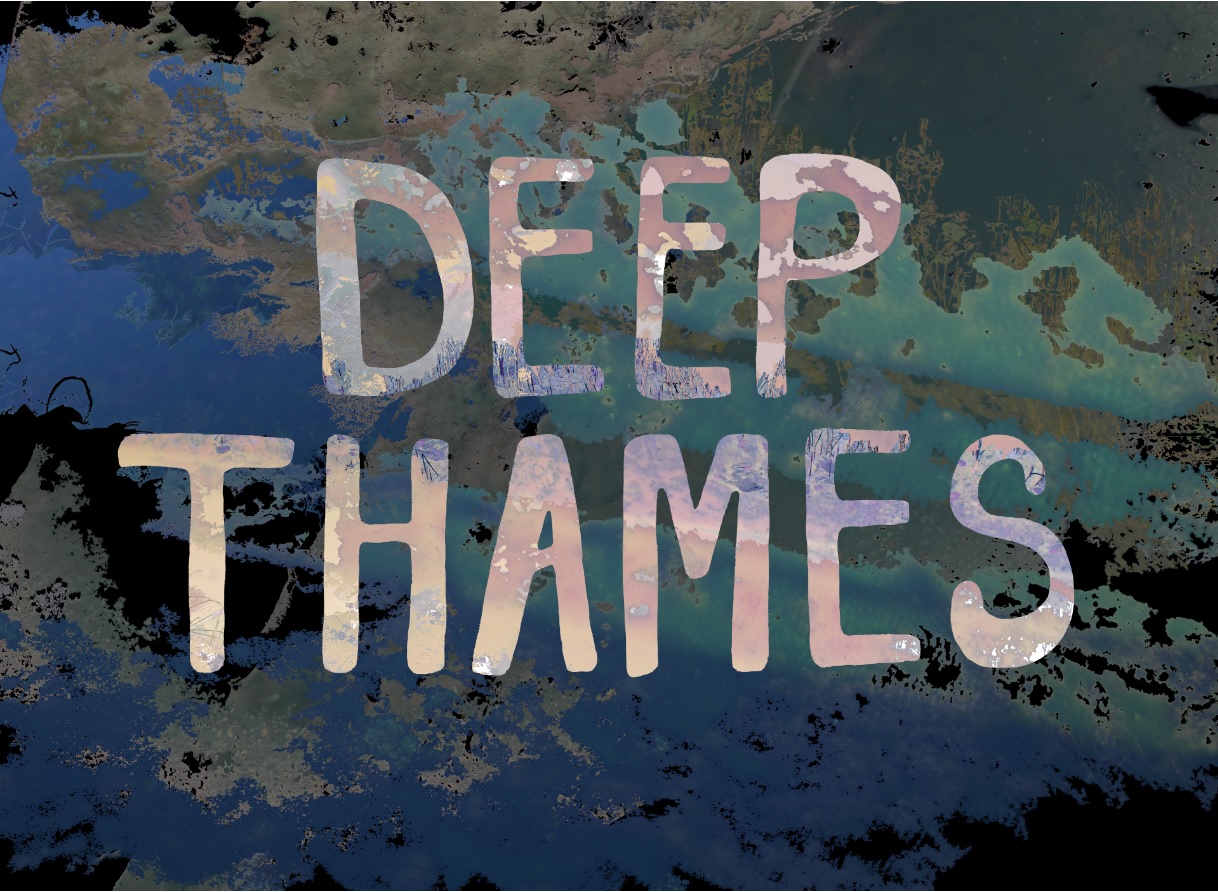
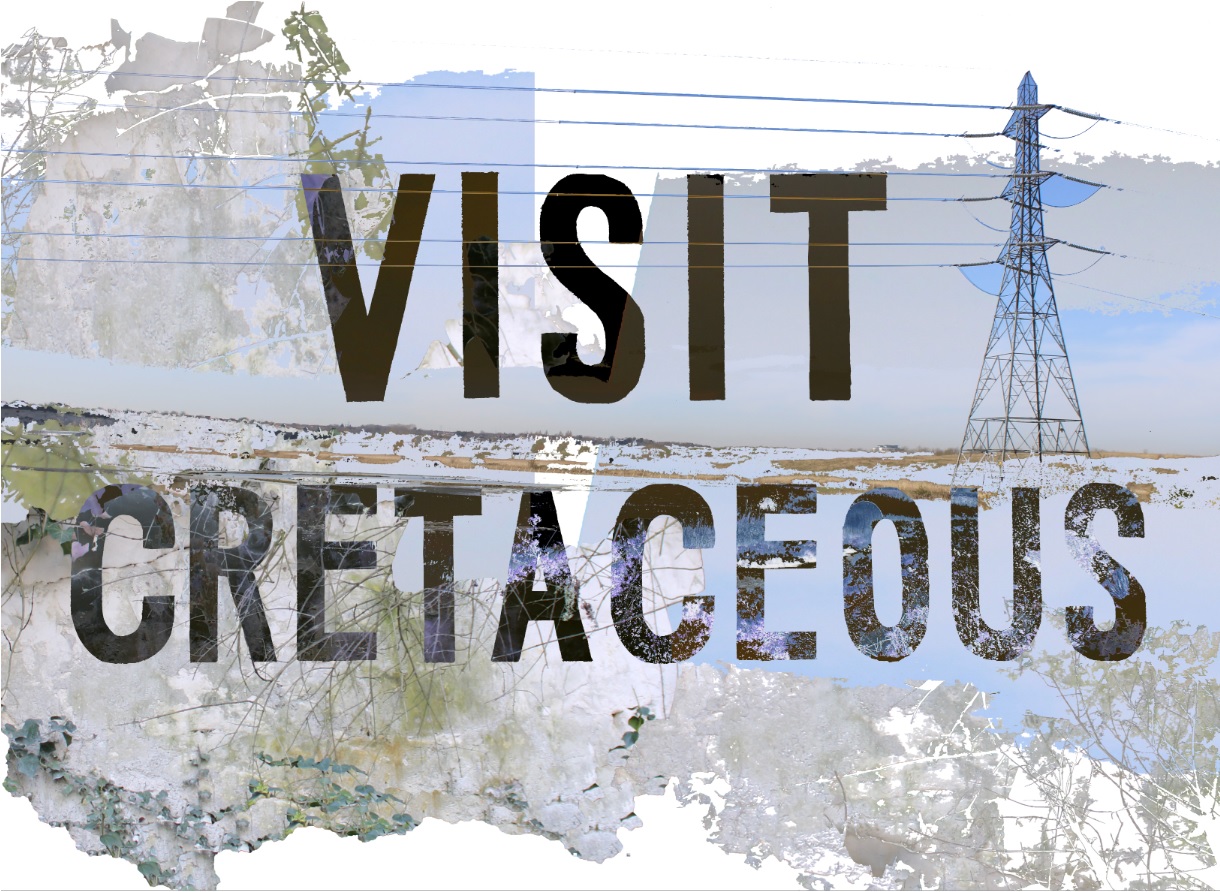
I suddenly had sculptures, banners and a series texts to somehow present in the landscape. I knew I wanted to document this presentation somehow in film, and for a while I wasn’t sure whether the resulting film would be a document or the work itself. I think it is both. I employed the help of James Eades, a videographer, wildlife and landscape photographer and drone pilot, and we went out for two sessions to record a sort of performance in the landscape, using the sculptures and banners. The first session was an incredibly windy afternoon, and the next morning we headed out to capture the sunrise over the Estuary at 4am.
I also created a pre-recorded video workshop to be used in a school setting
I still wonder what this thing actually is – for me it was an amazing and slightly messy amalgamation of stuff, smashed together like tectonics in an earthquake, and expressing a frustration with modes of presentation in a strange and challenging time. Critic and writer Lisa le Feuvre remarked it was an intense way to encounter a landscape she’d never visited; but if she were to visit, she felt that she might find these sculptures, relics of the performance, still sitting there.